Generative AI: Are designers cooked?
Robin Louw
|
Is it finally over for designers? I’ll compare my early AI-generated images to those created with the latest models to determine if AI has truly progressed. I’ll also experiment with generating a website prototype and assess whether UX/UI designers are replaceable by AI.
TLDR: Skilled experts and creatives may not need to worry; however, AI is rapidly advancing and able to complete entry-level tasks and is being integrated into tools whether we agree to it or not.
Midjourney 2022 vs 2026
I began experimenting with Midjourney’s open beta around 2022 using Discord and was amazed by the capabilities of generative AI. While other generative AI tools like OpenAI’s existed, they were not as good as Midjourney at the time.
Midjourney no longer requires Discord, and it's now possible to prompt directly from your dashboard. Here are comparisons with the latest version 8.1 using the same prompts to demonstrate the progress made. I’ll focus on image comparisons since video models weren’t available at the time. Midjourney requires a paid plan.
Prompt 1:
Photorealistic character design, young lady with blonde hair and blue eyes wearing gold jewelry, highly detailed
Prompt 2:
Junkie on the ground with a usb cable around the arm and game controller in one hand and iphone in the other hand
I’ve also experimented with generating new images that were previously difficult due to text rendering limitations. These projects would have taken weeks to conceptualise on their own.
Prompt 3:
Modern vector illustration. A perfectly balanced seesaw scale is centered on a light, minimalist pastel background. On the left side of the plank, representing "PASSION," are various vibrant icons spilling from a glowing heart: paintbrushes, musical notes, a camera, and a stylized flame, in warm reds, oranges, and yellows. On the right side, representing "MONEY," are concrete symbols like overflowing money bags, stacks of gold coins, currency bills, and a rising financial chart, in deep greens, blues, and golds. The plank rests horizontally on a geometric fulcrum. The style is clean, flat vector art with solid colors and minimal shading. The text "PASSION" is above the left side, and "MONEY" is above the right, in clear sans-serif font. The composition is clean and focused.
Prompt 4:
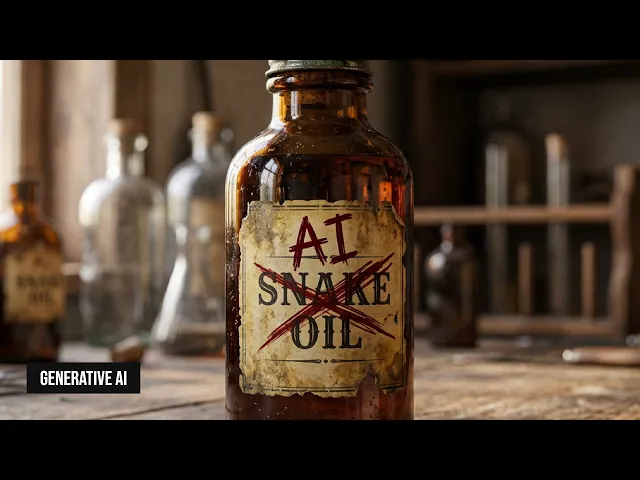
A photorealistic 3D render, highly detailed, of an antique, dark amber glass medicine bottle with natural imperfections. The bottle has a tarnished metal screw-top cap. A distressed, aged paper label is affixed to the front. On the label, the large, vintage-style printed text "SNAKE OIL" is clearly crossed out with messy, hand-scrawled red ink, appearing scratched through. Just above it, the letters "AI" are crudely hand-written in the same messy red ink, as if scrawled over the original text. The background is a gently blurred, moody workshop bench with old wood textures, dust, and other ancient, out-of-focus apothecary bottles and tools, all lit with a soft, warm, directional light that highlights the glass and the worn texture of the label. Studio quality render, sharp focus on the label, textured materials. 4k resolution.
Even though graphic design is not my specialization. The amount of progress "AI-generated slop" has made in such a short time would be concerning.
Midjourney vs Competitors
Adobe developed its own AI model called Firefly. However, Firefly has lagged behind due to training limitations. The great thing about Firefly is that it also integrates third-party models like Open AI and Google. Adobe Firefly requires a paid plan, but you can start with a free trial.
Here are comparisons using the same prompts for Midjourney and each competitor.
UX and UI design using AI
Early AI models were not that great when it came to creating functional websites and app prototypes. Now, however, tools like, for example, Google Stitch and Figma Make make concepting and prototyping accessible to anyone. It's now possible to have a functional app published in a day with no coding or design experience. However, a polished app or website will still require expertise.
I have compared Google Stitch and Figma Make using the same prompt.
Prompt:
Build a single-page website featuring a centered 'Box Breathing' animation. The design should be minimalist and calming with a dark mode aesthetic (deep charcoal background).

Core Features:
- The Box: A rounded-corner square in the center of the screen with a soft glowing border.
- The Animation: The box should scale up smoothly for 4 seconds, hold for 4 seconds, scale down for 4 seconds, and hold for 4 seconds.
- Text Cues: Inside or above the box, display dynamic text that changes based on the phase: 'Inhale', 'Hold', 'Exhale', 'Hold'.
- Visuals: Use a soft gradient fill for the box that pulses slightly. Ensure the layout is fully responsive and centered using Flexbox.
- Tech Stack: Use clean HTML and CSS (Keyframes for the animation). No external heavy libraries.
Conclusion
I've been designing professionally for over a decade and have seen tools and workflows come and go. AI is rapidly evolving and becoming more integrated into our tools, but it won’t completely replace skilled designers and creatives. Experts will always be needed, but AI can certainly replace entry-level tasks, which was how many older designers started their careers.
Regarding the ethics of AI. There are valid concerns about theft of intellectual property and objections to its use. For example, Adobe has faced criticism for embracing AI against the wishes of many users. However, this hasn’t deterred companies from investing heavily in AI. As a result, AI features are increasingly being incorporated into our tools and becoming unavoidable. To remain relevant as a designer means incorporating or staying one step ahead of AI.
Thanks for visiting Design Chillout! While you’re here, don’t forget to checkout the designer toolkit or grab something from the cooler box!
AI disclaimer:
This article contains original content. However, AI may have been used to generate content from transcripts or to correct the grammar, spelling, and formatting of existing content.
Advertisement